
Your cart (0)
Your cart is empty
Tax included and shipping calculated at checkout
Your cart is empty
Tax included and shipping calculated at checkout

Mushroom tablets and gummies differ in physical format, but the format alone does not tell you their ingredients, serving strength, or suitability for you. For mushroom tablets vs gummies in 2026, compare the exact product labels and matching batch reports before treating either format as the better choice.
The useful difference is the format you handle and the product information you can verify. Gummies are chewable confectionery; tablets have a different physical form, but you should not assume that every tablet is swallowed, chewed, or dissolved the same way.
Our tablet and gummy pages give you starting points for that comparison. Choose by the exact label—not by a familiar-looking shape or a flavor name.
| Comparison | Tablets | Gummies |
|---|---|---|
| Product-page starting point | Sunburst Tabs | Skittle Gummies |
| Physical format | Tablet form; check the stated directions | Chewable gummy form; check the stated directions |
| Best for | Adults who prefer a tablet format, after checking suitability | Adults who prefer a chewy format, after checking suitability |
| Practical advantage | An alternative to a gummy texture | A chewy confectionery format |
| Practical limitation | The word tablet does not establish how to take it | Candy-like presentation does not establish ordinary-candy ingredients |
| What the format cannot establish | Composition, amount per serving, or batch verification | Composition, amount per serving, or batch verification |
Neither column wins on verified strength, safety, or dietary compatibility just because of its shape. Those are product-level questions, and the answers belong on the label and in relevant documentation.
A product can look familiar while containing ingredients you would not expect from its appearance. That makes the packaging information more useful than an assumption about what tablets or gummies usually contain.
For your 2026 comparison, separate preference from verification. You can prefer a chewy texture without knowing whether a particular gummy fits your dietary needs; you can prefer tablets without knowing whether a particular tablet's directions suit you.
This distinction keeps the decision straightforward. First establish what the product is and what its documentation supports, then decide whether you like the format.
Use the same checklist for both formats. Asking different questions about tablets and gummies makes it easy to give one a pass on information you would demand from the other.
Start with the full product name and the packaging in front of you. A page about a product category is not a substitute for information about the exact item you are considering.
Check that the name on the package agrees with the product page and any supporting report. Similar names, related flavors, or a shared manufacturer do not make different products interchangeable.
Read the complete published ingredient list for the exact product. Do not infer sweeteners, mushroom ingredients, allergens, or dietary compatibility from the word gummy or tablet.
If the list is missing or ambiguous, ask us for clarification before deciding. An unclear ingredient is a question to resolve, not a blank to fill with a guess.
Distinguish the amount in an individual piece from the amount in a labeled serving. Also distinguish both from the total amount in a package; these descriptions answer different questions.
A larger piece does not establish a larger amount of any ingredient. Likewise, a package containing more pieces does not establish that each piece contains less.
Follow the directions printed for the exact product. Do not assume a tablet is intended to dissolve in your mouth, or that instructions for one gummy also apply to another.
Read warnings with the same attention you give the ingredients. A preferred texture does not override a warning or make a product appropriate for you.
Check whether a relevant report identifies the product and matches the batch on your package. Then read what was actually tested and reported.
A general lab-tested statement is not verification of every individual batch. The useful evidence is the connection between your item, its batch identifier, and the scope of the report.
The variation comes from the exact formulation and labeling—not a rule that all tablets or all gummies share the same contents. These are the factors to check when two products appear similar:
For mushroom tablets vs gummies in 2026, these checks matter more than a broad claim that one format is better. A useful comparison ends with specific answers, not a format stereotype.
Tablets are not inherently stronger than gummies. You need information about the exact ingredients and labeled amounts before making that comparison.
Even an amount expressed in the same unit needs context. An amount of a named compound, an extract, and a blend are different descriptions; matching units do not automatically make those quantities equivalent.
Do not compare a tablet's whole-package statement with a gummy's per-serving statement. Read the measurement basis first, and ask for clarification when the labels use different terms.
We also do not recommend using appearance, texture, or product names to predict effects. Those details do not establish what a product contains.
Gummies are not automatically easier to assess than tablets. The clearer, complete ingredient list is the better starting point, regardless of format.
For either option, check the ingredients and any allergen statements relevant to you. Do not turn the absence of a familiar ingredient in a product description into a verified free-from claim.
If you need a specific dietary requirement confirmed, ask about the exact product rather than the category. Your question should name the requirement and the item so the answer does not drift into a general statement about gummies or tablets.
A lab-tested description does not, by itself, establish that a report matches the package you have. Batch-specific verification requires that connection.
Our mushroom edibles are described as lab-tested, but a general description is not a substitute for checking your exact batch. Read the report's product identification, batch information, and test scope before drawing a conclusion.
For a 2026 purchase, a date is useful context—not proof on its own. A recently dated report for a different product or batch still does not identify your package.
Check the sample identity and the listed tests. A report supports conclusions about what it actually assessed; it does not automatically answer every question about ingredients, allergens, or personal suitability.
Also read the units and any explanatory notes. A test result without its measurement basis is easy to misread, especially when you are comparing different product formats.
Use this sequence whenever you compare a tablet with a gummy. It keeps the review focused on the exact item instead of a general impression.
You do not need to turn this into a complicated scoring system. If an essential detail remains unclear, pause the choice and ask about that detail.
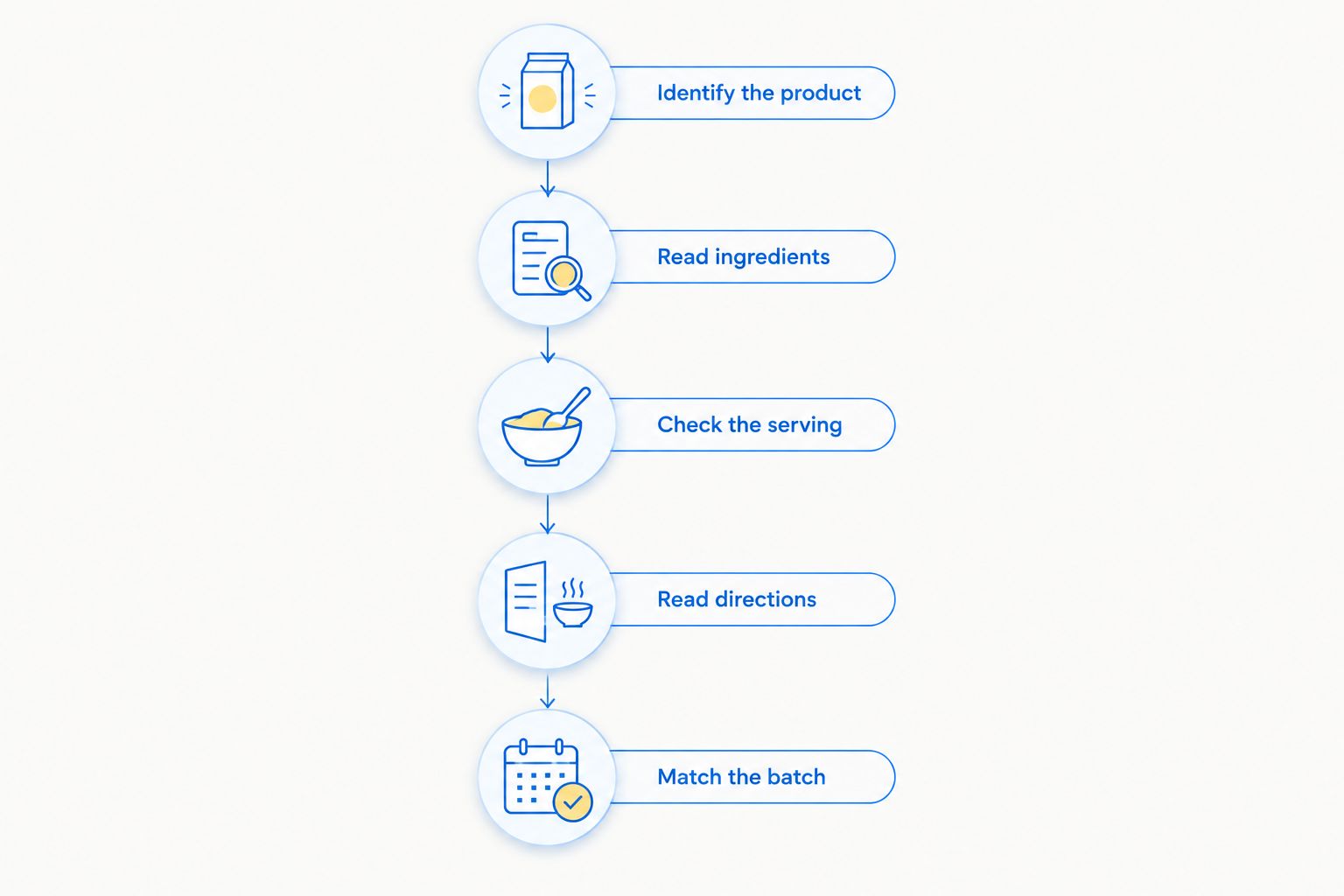
The sequence works for both formats because neither deserves a lighter check. Once the essential information is clear, texture and presentation become preferences rather than substitutes for evidence.
The best format is the one whose current information you understand and whose physical form you prefer, provided the product is appropriate for you. There is no evidence here for naming tablets or gummies the universal winner.
If chewy confectionery is not your preference, a tablet format is an alternative to examine. The trade-off is that the word tablet still leaves its specific directions unresolved until you read the label.
If you prefer a gummy texture, that is a valid format preference. The limitation is that a candy-like appearance can distract from the ingredient and warning checks you still need to make.
Silly Farms is a starting point for adults comparing mushroom edibles across gummies, chocolate bars, and tabs. You can explore those formats through Silly Farms, but compare the exact products rather than assuming shared ingredients or instructions.
For your 2026 decision, put verified product information ahead of flavor names or format familiarity. Preference belongs at the end of the check, not in place of it.
Ask a narrow question tied to the exact product. That is more useful than asking whether all gummies or all tablets are the same.
For example, ask which published ingredient list applies to the item, what the label means by a serving, or which report matches the package's batch identifier. If dietary restrictions matter, name the restriction rather than asking whether the product is generally healthy.
A clear question makes the unresolved issue visible. You should not have to infer an ingredient, a direction, or a batch match from the product's name.
What's the main difference between mushroom tablets and gummies?
The main difference is physical format: gummies are chewy confectionery, while tablets use a tablet form. Ingredients, serving information, and directions must be checked for each exact product.
Are mushroom tablets stronger than gummies?
Mushroom tablets are not inherently stronger than gummies. Compare the exact labeled ingredients, amounts, and measurement basis rather than assuming shape establishes strength.
Can I use the same directions for tablets and gummies?
No, you should use the directions for the exact product. Do not assume that a tablet is swallowed, chewed, or dissolved based only on its format.
Are mushroom gummies automatically suitable for my dietary restrictions?
No, gummy format does not establish dietary suitability. Read the current ingredient list and relevant allergen information, and ask us about anything unclear.
Does lab-tested mean the report matches my package?
No, a general lab-tested statement does not establish a match to your package. Check the exact product, batch identifier, and test scope in the supporting report.
Should I compare the amount per piece or per package?
Compare amounts on the same stated basis. An individual piece, a labeled serving, and the total package are different measurement bases and should not be treated as equivalent.
What should I do if a product's ingredient list is unclear?
Ask us for clarification about the exact product before deciding. Do not infer ingredients from a flavor name, product format, or another item's label.
The easiest comparison mistake is matching the units but missing what those units describe. The same unit can refer to a piece, a serving, a package, or a differently defined ingredient amount.
Before you finish your mushroom tablets vs gummies comparison, read the words surrounding every amount. A meaningful comparison matches both the measurement basis and what is being measured.